
Rubik’s Revenge, the 4×4 cube, presents a fascinating challenge beyond the classic 3×3․ Numerous PDF guides and video tutorials, like those by Noah Richardson and Rubiks Cube Tutorials, offer step-by-step solutions․
Mastering this puzzle involves center solving, edge pairing, and treating it like a 3×3, often requiring parity algorithms for completion․
What is the Rubik’s Revenge?
The Rubik’s Revenge, officially known as the 4×4 Rubik’s Cube, is a more complex variation of the original 3×3 Rubik’s Cube․ Unlike its predecessor, it features four layers in each dimension, resulting in a significantly increased number of possible permutations․ This larger size introduces new challenges and requires different solving techniques․
Instead of fixed center pieces, the 4×4 cube has center pieces that need to be assembled correctly․ This initial step of solving the centers is crucial before proceeding with edge pairing․ Many resources, including PDF guides and YouTube tutorials from channels like Rubiks Cube Tutorials, detail this process․
Solving the 4×4 often involves breaking down the puzzle into manageable phases: solving the centers, pairing the edges, and then solving it as if it were a 3×3 cube․ However, the 4×4 introduces parity errors, situations that cannot occur on a 3×3, requiring specific algorithms to resolve․ These parity algorithms are often found within comprehensive rubik 4×4 solve pdf guides․
Why Solve a 4×4?
Solving a 4×4 Rubik’s Cube, or Rubik’s Revenge, offers a significant step up in complexity and satisfaction compared to the 3×3․ It’s a fantastic mental exercise, enhancing problem-solving skills, spatial reasoning, and algorithmic thinking․ The challenge lies not only in the increased number of pieces but also in the introduction of parity errors – a unique hurdle not present in smaller cubes․
Successfully conquering the 4×4 provides a deeper understanding of Rubik’s Cube mechanics and prepares you for even larger puzzles like the 5×5․ Numerous online resources, including detailed rubik 4×4 solve pdf guides and YouTube tutorials (like those from Rubiks Cube Tutorials and Noah Richardson), make the learning process accessible․

Beyond the intellectual benefits, solving the 4×4 is a rewarding hobby․ The sense of accomplishment after completing this intricate puzzle is substantial․ Many cubers also enjoy the speedcubing aspect, striving to improve their solve times through practice and optimized algorithms, often documented in advanced PDF resources․

Phase 1: Solving the Centers
Center solving is the initial step, forming 6 colored blocks․ PDF guides and tutorials (Rubiks Cube Tutorials) detail algorithms to build these, crucial for treating the 4×4 like a 3×3․
Understanding Center Pieces
Center pieces on a 4×4 Rubik’s Cube differ significantly from the 3×3․ Instead of fixed center colors, each face consists of four individual center pieces․ These pieces must be correctly positioned and oriented to create the illusion of a single center color, mimicking the 3×3’s functionality․
Successfully solving the centers is the foundational first step․ PDF guides, like those referenced in online resources, emphasize this stage․ The goal isn’t just to get the correct colors together, but also to ensure they form a 2×2 square on each face․ Incorrectly assembled centers will prevent the cube from being solved as a 3×3 later on․
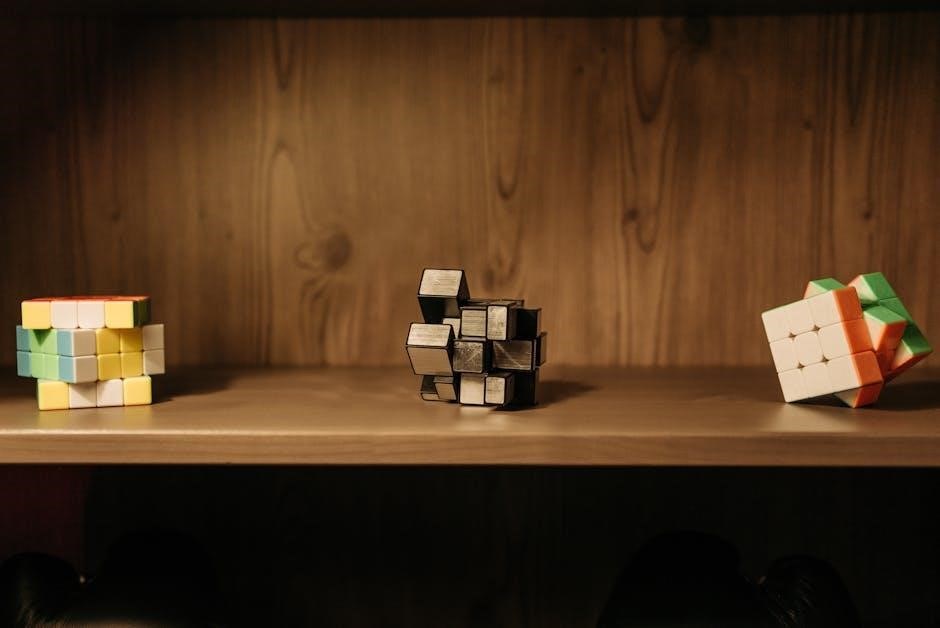
Beginners often struggle with recognizing the different center piece types and understanding how they interact․ Tutorials, such as those found on YouTube (Rubiks Cube Tutorials), visually demonstrate the process․ Focus on building each center individually, using algorithms to manipulate the pieces into their correct positions․ Remember, a solid center foundation is key to a smooth solving experience․
Solving the White Center
Solving the white center is typically the first step in many 4×4 Rubik’s Cube solution guides․ Begin by gathering all the white center pieces․ Don’t worry about their initial orientation; the focus is on assembling them into a 2×2 square on the white face․ Many PDF guides illustrate this process with clear diagrams․
Algorithms are crucial here․ Several beginner-friendly methods exist, often involving rotating the top layer and utilizing specific move sequences to bring the white pieces together․ YouTube tutorials (like those from Rubiks Cube Tutorials) visually demonstrate these algorithms, making them easier to follow․
Pay attention to maintaining the integrity of already placed pieces while inserting new ones․ It’s common to temporarily disrupt parts of the center, but the goal is to restore it to a solved state․ Patience is key! Once the white center is complete, it serves as the anchor for subsequent steps, mirroring the 3×3 solving approach․
Solving the Yellow Center
Solving the yellow center follows a similar methodology to the white center, but often presents a slightly greater challenge due to its position opposite the solved white center․ Again, the initial goal is to gather all yellow center pieces, disregarding their orientation․ Many PDF guides detail specific algorithms tailored for yellow center completion․
The key is to strategically manipulate the cube’s layers to bring the yellow pieces into place without disrupting the already solved white center․ This requires careful planning and execution of move sequences․ Online tutorials, such as those found on YouTube, provide visual aids to understand these algorithms effectively․
Be mindful of preserving the white center’s integrity throughout the process․ Temporary disruptions are expected, but the aim is to restore the entire center to a solved state․ Consistent practice, guided by available resources, will build proficiency in solving the yellow center efficiently․
Solving the Remaining Centers
Solving the remaining centers – red, blue, and orange – builds upon the techniques used for the white and yellow centers․ The process involves strategically positioning and orienting the center pieces for each color․ Numerous PDF guides offer detailed algorithms and visual representations to aid in this phase․
A common approach involves building 1×2 blocks of the desired color and then inserting them into their correct positions within the center․ This often requires a series of rotations and manipulations of the cube’s layers․ Online tutorials demonstrate these techniques, emphasizing the importance of preserving previously solved centers․
Pay close attention to maintaining the integrity of the white and yellow centers while working on the remaining colors․ Careful planning and precise execution of algorithms are crucial for success․ Consistent practice, utilizing available resources, will enhance your ability to solve the remaining centers efficiently and accurately․

Phase 2: Pairing the Edges
Edge pairing is crucial․ PDF guides and tutorials (like Rubiks Cube Tutorials) demonstrate algorithms to connect matching edge pieces, forming 3×3-like edges․
Parity errors can occur, requiring specific algorithms to resolve․
Identifying Edge Pieces
Edge piece identification is the foundational step in 4×4 solving․ Unlike the 3×3, the 4×4 possesses multiple pieces of each color combination within the edges․ Your goal isn’t to simply position edges, but to find the pairs that belong together․ These pairs will eventually function as single edges on a conceptually reduced 3×3 cube․
PDF guides often highlight this process visually, showing how to distinguish between the correct edge pairings; Look for two edge pieces with identical color schemes, but remember they won’t be adjacent initially․ Focus on identifying the colors and their relative positions on each piece․
Begin by selecting a color, and then search for its corresponding partner․ This can be a methodical process, especially for beginners․ Resources like those found on Rubiksplace․com and YouTube tutorials emphasize patience during this stage․ Incorrect pairings will lead to unsolvable situations later, so careful identification is paramount․ Understanding this initial step, as detailed in many rubik 4×4 solve pdf guides, is key to a successful solve․
The Edge Pairing Algorithm
Once you’ve identified matching edge pieces, the next step is employing an algorithm to bring them together․ Many rubik 4×4 solve pdf guides and video tutorials, such as those by Rubiks Cube Tutorials, present a core algorithm for this purpose․ This algorithm typically involves a sequence of R, U, L, and F moves, designed to swap edge pieces without disrupting already paired edges․
The specific algorithm used can vary, but a common one focuses on positioning the target edge pieces in specific slots before execution․ PDF guides often illustrate these setups with diagrams․ It’s crucial to understand how the algorithm works, not just memorize the moves․ This allows for adaptation when pieces aren’t in the ideal starting position․
Practice is essential․ Repeatedly applying the algorithm will build muscle memory and improve your speed․ Remember to check your work after each execution to ensure the pairing was successful and no other edges were disturbed․ Mastering this algorithm, as detailed in online resources, is vital for progressing to the next phase․
Dealing with Edge Pairing Parity Errors
During edge pairing on a 4×4, you may encounter a frustrating situation: parity errors․ These occur because the 4×4 has an even number of edge pieces, leading to configurations impossible on a 3×3․ Many rubik 4×4 solve pdf guides dedicate sections to recognizing and resolving these errors․ Rubiks Cube Tutorials specifically addresses this in their edge pairing video․
A common parity case involves only two edges needing to be swapped, but the standard algorithm doesn’t work․ PDF guides illustrate specific algorithms designed solely for these parity situations․ These algorithms often appear complex, but they’re essential for completing the cube․
Recognizing parity is key․ Look for situations where you’ve paired most edges, but two remain seemingly unsolvable with standard methods․ Don’t panic! Applying the correct parity algorithm will resolve the issue․ Practice these algorithms separately to build familiarity and avoid confusion during a solve․
Recognizing Parity Situations
Identifying parity errors on a 4×4 Rubik’s Cube is crucial for a successful solve․ These errors arise from the even number of center, edge, and corner pieces, creating configurations impossible on a 3×3․ Many rubik 4×4 solve pdf resources emphasize learning to spot these situations early․ Rubiks Cube Tutorials’ videos demonstrate visual cues for parity․
A key indicator is reaching a point where you’ve seemingly completed edge pairing, yet two edges remain incorrectly oriented or positioned․ Standard 3×3 algorithms will fail to resolve this․ Another sign is an odd number of flipped edges after attempting a PLL algorithm․
PDF guides often include diagrams illustrating common parity cases․ Learning to recognize these patterns allows for a quicker application of the appropriate parity algorithm․ Don’t attempt to force a solution with 3×3 methods; instead, confirm parity and proceed with the dedicated fix․

Phase 3: Solving as a 3×3
Once centers are solved and edges paired, treat the 4×4 as a 3×3! Rubik 4×4 solve pdf guides detail applying familiar 3×3 methods for the final layers․
Treating Centers as Single Centers
After successfully solving the centers on the 4×4 Rubik’s Cube, a crucial step towards completion involves conceptually treating each assembled center as if it were a single, unified center piece, much like those found on a standard 3×3 Rubik’s Cube․ This simplification is key to transitioning into the final stages of the solve․
Rubik 4×4 solve pdf guides consistently emphasize this point, as it allows solvers to leverage their existing knowledge of 3×3 solving techniques․ The previously complex 4×4 now behaves more predictably, enabling the application of familiar algorithms for the first and second layers․ Essentially, you’ve reduced the problem’s complexity by creating functional equivalents to the 3×3’s center pieces․
Remember that the paired edges also contribute to this simplified structure․ By focusing on these established centers, you can navigate the remaining steps with greater ease and efficiency, ultimately leading to a solved 4×4 Rubik’s Cube․ This conceptual shift is fundamental to mastering the 4×4 solve․
Applying 3×3 Solving Methods
Once the centers are solved and treated as single units, and the edges are paired, the 4×4 Rubik’s Cube can be solved using standard 3×3 solving methods․ This is a pivotal moment, as it allows solvers to utilize their pre-existing knowledge and algorithms․ Many Rubik 4×4 solve pdf guides highlight this transition, emphasizing the cube’s newfound similarity to its smaller counterpart․
Begin by applying the algorithms for solving the first layer of a 3×3, treating the center groupings as single centers․ Subsequently, proceed with the second layer algorithms, again maintaining the conceptual equivalence․ The key is to ignore the internal structure of the centers and edges, focusing solely on their outer appearance․
However, be mindful of potential parity errors that can arise in the final stages․ These are unique to even-layered cubes like the 4×4 and require specific algorithms to resolve, which will be covered in later phases․
First Layer Solution (4×4)
Solving the first layer of a 4×4 Rubik’s Cube, after centers are established, mirrors the initial steps of a 3×3 solve, but with added considerations․ Many Rubik 4×4 solve pdf guides detail this process, emphasizing the importance of correctly positioning the corner and edge pieces around the solved center․ Begin by inserting the corner pieces, ensuring their colors align with the adjacent center pieces․
Next, focus on the edge pieces․ These require careful alignment with both the top and side center colors․ Utilize algorithms similar to those used in 3×3 solving, adapting them slightly to account for the larger cube size․ Pay close attention to maintaining the solved center groupings throughout this stage․
Remember that incorrect piece placement can disrupt the solved centers, requiring backtracking and correction․ Patience and methodical execution are crucial for a clean first layer solution․
Second Layer Solution (4×4)
Solving the second layer of the 4×4 Rubik’s Cube builds upon the completed first layer, again drawing parallels to 3×3 solving techniques․ Numerous Rubik 4×4 solve pdf guides illustrate this stage, highlighting the need to insert edge pieces without disturbing the established layers․ Identify edge pieces belonging to the second layer by checking they don’t contain the yellow color (assuming white is on the bottom)․
Algorithms are used to insert these edges correctly, moving them from the top layer into their designated slots․ These algorithms typically involve a series of rotations designed to maneuver the edge piece into position without disrupting the first layer or existing centers․
Careful observation of color matching is vital․ Incorrectly positioned edges will require removal and re-insertion․ Consistent application of the correct algorithms, as detailed in available resources, will lead to a fully solved second layer․

Advanced Techniques & Parity
Advanced 4×4 solving, detailed in many Rubik 4×4 solve pdf guides, involves PLL and OLL, plus parity algorithms to correct final-stage errors․

Mastering these techniques boosts speed and efficiency․
Understanding Parity Algorithms
Parity errors arise in the 4×4 cube due to its even layer structure, unlike the odd layers of the 3×3․ These errors manifest as unsolvable situations when treating the cube as a 3×3, requiring specific algorithms to rectify․ Many Rubik 4×4 solve pdf guides dedicate sections to these crucial fixes․
Essentially, parity algorithms swap or flip pieces in a way that’s impossible on a standard 3×3․ Two primary parity cases commonly occur: edge parity (where two edges are flipped) and corner parity (where two corners are swapped)․ Resources like those found on Rubiksplace․com emphasize memorizing just a few algorithms to handle these scenarios․
Understanding why these algorithms work isn’t always necessary initially; rote memorization is sufficient․ However, recognizing the parity situation quickly is key to efficient solving․ Video tutorials, such as those by Rubiks Cube Tutorials, visually demonstrate these algorithms and their application, making them easier to grasp․ Practice is vital to internalize these fixes and seamlessly integrate them into your solve․
PLL (Permutation of Last Layer) for 4×4
Once the 4×4 cube is reduced to a state resembling a 3×3, the Permutation of the Last Layer (PLL) comes into play․ However, the 4×4 PLL is more complex, featuring additional cases due to the center pieces․ Rubik 4×4 solve pdf guides often dedicate significant portions to PLL algorithms, categorizing them for easier learning․
Unlike the 3×3, the 4×4 PLL involves permuting not only edges and corners but also the center pieces on the top layer․ This introduces new algorithms to correctly position these centers while simultaneously solving the edges and corners․ Recognizing the specific PLL case is crucial for applying the correct algorithm․
Many resources suggest learning PLL in stages, starting with the more common cases․ Visual aids, like those found in online tutorials and PDF guides, are invaluable for understanding the algorithms and their effects․ Mastering 4×4 PLL significantly reduces solve times and demonstrates a deeper understanding of the cube’s mechanics․
OLL (Orientation of Last Layer) for 4×4
Orientation of the Last Layer (OLL) on a 4×4 Rubik’s Cube is a crucial step following PLL, and it’s considerably more involved than on a 3×3․ Rubik 4×4 solve pdf resources emphasize the increased complexity due to the need to orient both the edge and center pieces on the final layer․ Unlike the 3×3, simply orienting corners isn’t enough․
The 4×4 OLL algorithms focus on correctly orienting the yellow centers while simultaneously adjusting the edge orientations․ These algorithms can appear daunting initially, but breaking them down into smaller steps and utilizing visual aids from online tutorials or PDF guides is highly recommended․
Learning OLL often involves recognizing patterns on the top layer and selecting the appropriate algorithm․ Many speedcubers advocate for learning OLL in stages, prioritizing the most frequently occurring cases․ Consistent practice and memorization are key to efficiently executing these algorithms and achieving faster solve times․
Common 4×4 Parity Cases
Parity errors are unique to even-layered cubes like the 4×4, and understanding them is vital for a successful solve․ A rubik 4×4 solve pdf will invariably dedicate sections to these frustrating scenarios, as they don’t occur on the 3×3․ Two primary parity cases arise: edge parity and center parity․
Edge parity manifests as a single edge flip, where two edges appear swapped․ Center parity involves two incorrectly oriented center pieces․ These situations arise because the 4×4 has a greater degree of freedom than the 3×3, allowing for configurations impossible on the smaller cube․
Specific algorithms are required to resolve these parity errors․ Resources like those found on Rubiksplace․com and YouTube tutorials detail these algorithms, often involving sequences of moves that seem counterintuitive at first․ Recognizing the parity case correctly is the first step; then, applying the appropriate algorithm restores the cube to a solvable state․

Resources and Further Learning
PDF guides, YouTube tutorials from creators like Rubiks Cube Tutorials and Noah Richardson, and websites like Rubiksplace․com provide extensive 4×4 learning materials․
Practice consistently for speedcubing success!
Online Tutorials (YouTube Links)
YouTube serves as an invaluable resource for visual learners tackling the 4×4 Rubik’s Cube․ Rubiks Cube Tutorials offers a comprehensive, multi-part series dedicated to solving the “Rubik’s Revenge․” Part 1 focuses on mastering the centers (https://youtu․be/osoyrtMf9AM), while Part 2 expertly guides you through edge pairing, including crucial information on handling edge pairing parity errors (https://youtu․be/DZ4HGesuXno)․

Finally, Part 3 details the finishing stages and addresses those tricky final parity errors (https://youtu․be/uInyps1NHj8)․ Noah Richardson also provides an “Easiest Tutorial” (https://noahrichardson․live) offering a streamlined approach․ These tutorials often emphasize methods applicable to other NxN cubes, minimizing the need to learn numerous algorithms․ Many channels demonstrate techniques for both beginners and those aiming for faster solve times, making YouTube a dynamic learning platform for all skill levels․ Remember to supplement video learning with practice and potentially a PDF guide for reference․
PDF Guides and Websites
While video tutorials excel at visual demonstration, PDF guides and dedicated websites provide structured, referenceable solutions for the 4×4 Rubik’s Cube․ Many online resources complement video learning, offering detailed algorithms and step-by-step instructions in a static format․ Websites like Rubiksplace;com (mentioned in a 2018 guide) serve as valuable archives of solving techniques, though website availability can change over time․
Searching for “rubik 4×4 solve pdf” yields numerous downloadable guides, ranging from beginner-friendly introductions to advanced method explanations․ These PDFs often include diagrams illustrating each step, making them ideal for offline study and practice․ A guide from January 19, 2018, highlights that mastering the 4×4 requires memorizing only four algorithms (two parity fixes and two from edge pairing)․ Combining the strengths of both visual and textual resources – YouTube tutorials and downloadable PDFs – is the most effective approach to conquering the Rubik’s Revenge․
Speedcubing Techniques for 4×4
Beyond simply solving the 4×4, speedcubing focuses on minimizing solve times․ While beginner methods detailed in PDF guides establish a foundation, advanced techniques are crucial for faster results․ These often involve look-ahead, recognizing patterns, and efficient fingertricks․ Understanding parity algorithms is paramount, as these unique scenarios frequently arise in 4×4 solves and can significantly impact time․
Many resources, initially designed for 3×3 speedcubing, can be adapted for the 4×4, particularly after the cube is reduced to a 3×3-like state․ Practicing PLL (Permutation of Last Layer) and OLL (Orientation of Last Layer) algorithms, though more complex on a 4×4, dramatically improves speed․ Consistent practice, alongside studying advanced techniques from experienced cubers (often shared through online tutorials and communities), is key to progressing in 4×4 speedcubing․ A solid understanding of the cube’s mechanics, gained through initial PDF study, is the essential first step․
Practice and Patience
Solving the 4×4 Rubik’s Cube, even with a PDF guide, demands significant practice and patience․ Initial solves will likely be slow and require frequent referencing of algorithms․ Don’t be discouraged by early struggles; mastery comes with repetition and a deepening understanding of the cube’s mechanics․ Consistent practice builds muscle memory, allowing for faster execution of algorithms and improved recognition of patterns․
Focus on mastering each stage – centers, edges, and the 3×3 reduction – before attempting to speed up․ Regularly revisiting video tutorials alongside your PDF can reinforce concepts and reveal alternative approaches․ The parity cases, unique to the 4×4, often require dedicated practice to recognize and solve efficiently․ Remember that even experienced cubers encounter setbacks․ Persistence, combined with a methodical approach, is the key to unlocking the satisfaction of solving Rubik’s Revenge․